Why Testimonials SEO Is the Secret Weapon for Organic Growth in 2026
SEO in 2026 looks nothing like it did five years ago.
Ranking is no longer just about keywords, backlinks, or technical hygiene. Those still matter—but they’re no longer decisive on their own. What separates brands that grow organically from those that stagnate is something far more fundamental:
Trust.
Search engines are getting better at approximating human judgment. And humans don’t trust claims—they trust experiences. This is why testimonials have quietly evolved from “conversion assets” into one of the most underutilized SEO growth levers available today.
This article explains why testimonials SEO is becoming a secret weapon for organic growth in 2026—and how brands that understand this shift are building compounding visibility instead of chasing rankings.
The Core Shift in SEO: From Relevance to Credibility
Traditional SEO answered one main question:
“Is this page relevant to the query?”
Modern SEO answers a harder one:
“Is this result trustworthy enough to recommend?”
As AI-assisted search, zero-click results, and answer engines rise, Google and similar systems increasingly prioritize:
- Demonstrated experience
- Consensus signals
- Consistent real-world outcomes
- Human validation
Testimonials sit at the intersection of all four.
They don’t just describe value.
They prove it has already happened.
Why Testimonials Are SEO Assets (Not Just Conversion Tools)
For years, testimonials lived near CTAs—useful, but isolated from SEO strategy.
In 2026, that separation is a mistake.
Testimonials contribute to organic growth in three structural ways:
- They strengthen E-E-A-T signals
- They increase on-page engagement metrics
- They create indexable, experience-based content
Each of these directly impacts how search engines evaluate quality.
Testimonials and E-E-A-T: Experience You Can’t Fake
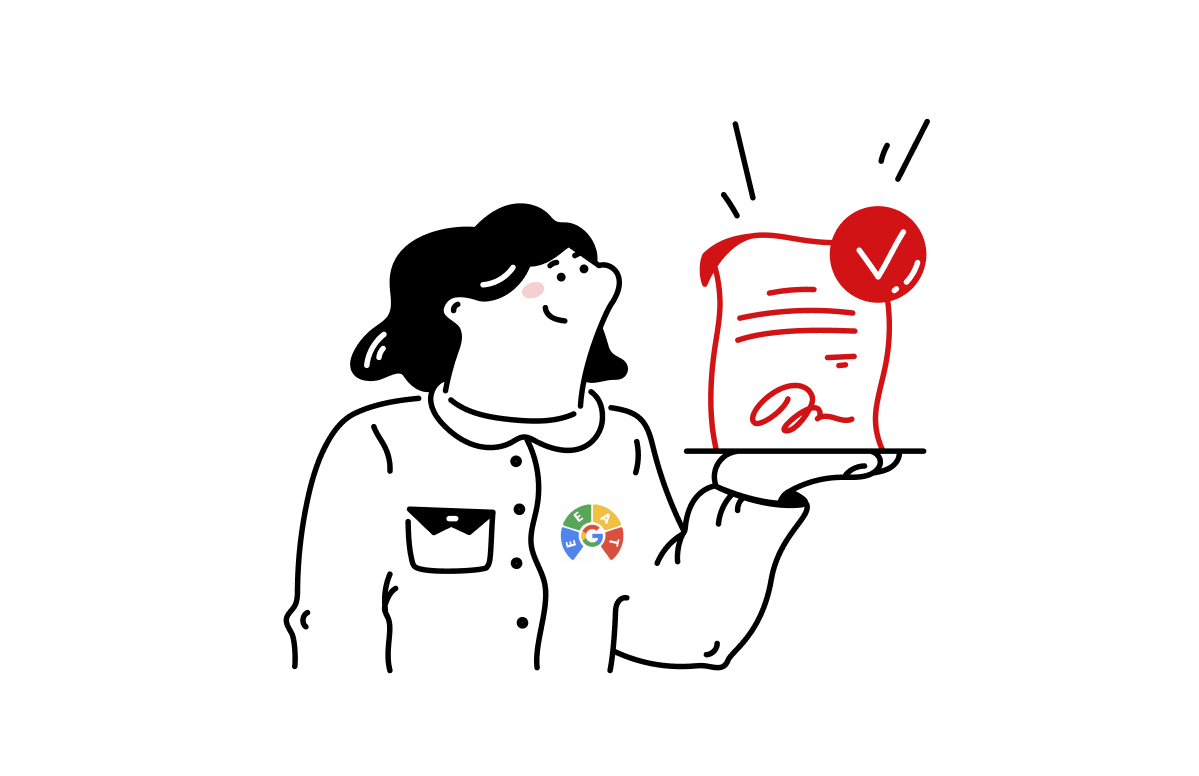
Google’s E-E-A-T framework (Experience, Expertise, Authoritativeness, Trustworthiness) increasingly emphasizes first-hand experience.
Testimonials are one of the few scalable content formats that naturally express:
- Real usage
- Real outcomes
- Real people
- Real context
A landing page that says:
“We help teams scale faster.”
is a claim.
A page that includes:
“We cut onboarding time by 40% in our first month using this tool.”
is evidence.
Search engines are far more comfortable surfacing evidence than promises.
The Engagement Effect: Why Testimonials Improve SEO Indirectly
Testimonials don’t just help rankings by existing—they change how users behave.
Pages with well-placed testimonials often show:
- Longer time on page
- Lower bounce rates
- Higher scroll depth
- More internal navigation
These are not vanity metrics.
They signal to search engines that:
“Users found what they were looking for—and stayed.”
In competitive SERPs, this behavioral layer often determines which pages survive algorithm updates and which quietly disappear.
Testimonials as Indexable Long-Tail Content
One of the most overlooked benefits of testimonials is language.
Customers describe products differently than brands do.
They naturally include:
- Long-tail queries
- Use-case language
- Objection-driven phrasing
- Industry-specific terminology
This turns testimonials into semantic expansion engines.
A single testimonial can rank for:
- “Best tool for [specific problem]”
- “Alternative to [competitor] for [use case]”
- “How to solve [pain point] without [risk]”
This is where testimonials seo becomes especially powerful: it captures intent brands rarely target explicitly—but buyers actively search for.
Why Video Testimonials Are Even Stronger for SEO in 2026
Text testimonials help.
Video testimonials multiply impact.
Here’s why:
1. Multimodal Signals
Video adds voice, tone, facial expression, and emotional nuance—signals that both users and AI systems increasingly interpret as authenticity.
2. Rich Snippet & SERP Opportunity
Video testimonials open the door to:
- Video carousels
- Enhanced SERP listings
- AI summary inclusion
3. Cross-Channel Reinforcement
The same video strengthens:
- SEO
- Landing pages
- Paid campaigns
- Email nurture
- Sales enablement
This consistency compounds trust across the funnel.
It’s why platforms like Vidlo treat testimonials not as isolated widgets, but as structured, reusable trust assets designed to live across organic and conversion surfaces simultaneously.
The Difference Between “Having Testimonials” and Doing Testimonials SEO
Most brands technically have testimonials.
Very few optimize them.
High-growth brands:
- Place testimonials contextually, not randomly
- Tie testimonials to specific queries and pages
- Structure testimonials with headings, schema, and relevance
- Align testimonials with user intent stages
Low-growth brands:
- Dump testimonials on a single page
- Hide them below the fold
- Treat them as decoration
- Never update them
SEO doesn’t reward presence.
It rewards integration.
Where Testimonials Drive the Most Organic Impact
Testimonials are most effective when embedded in:
- High-intent landing pages
- Comparison and alternative pages
- Pricing and decision pages
- Use-case and industry pages
- “Why us” and positioning content
These are the pages search engines most scrutinize for credibility.
Adding testimonials here doesn’t just increase conversion—it increases ranking defensibility.
AI Search, Answer Engines, and the Testimonial Advantage
As AI-generated answers increasingly replace traditional SERP clicks, content selection depends heavily on confidence and consensus.
AI systems prefer content that:
- Reflects real-world outcomes
- Shows repeated success patterns
- Demonstrates human endorsement
- Avoids purely promotional language
Testimonials check all of these boxes.
They are one of the few content formats that align human trust signals with machine interpretation.
Common SEO Mistakes Brands Make with Testimonials
Even well-intentioned teams sabotage testimonial impact by:
- Using anonymous or vague testimonials
- Over-editing customer language
- Separating testimonials from core content
- Ignoring structured data and context
- Treating testimonials as static forever
In 2026, stale proof is almost as bad as no proof.
The Compounding Effect: Why Testimonials Age Better Than Blog Posts
Blog content decays.
Testimonials compound.
Why?
- Outcomes remain relevant
- Experience ages well
- Social proof strengthens with volume
- Trust increases over time
A three-year-old testimonial can still convert—and still support SEO—if it reflects a stable problem and solution.
That’s rare in content marketing.
Final Thought: SEO Is Becoming Human Again
For years, SEO drifted toward technical manipulation.
In 2026, it’s swinging back toward human reality.
Search engines want to recommend what worked, not what sounds good. Testimonials are living proof of that shift.
Brands that treat testimonials as SEO infrastructure—not just conversion garnish—will build organic growth that survives algorithm changes, AI disruption, and competitive noise.
Because when trust becomes the ranking factor,
experience becomes the strategy.
And testimonials are experience—at scale.